
Hi, my name is Michael (Yucheng) Zhang, and I’m currently studying for an MPhil by research in Physics at the University of Cambridge, working with Professor Oleg Brandt (super nice and super busy!) on the ATLAS experiment.
The last time I updated this page, I was a final-year undergraduate at UCL. Since then, I’ve graduated, spent a summer at CERN, and moved to Cambridge. Apparently, updating my biography was the hardest part.
I’m originally from China and spent most of my childhood in Huizhou, a southern coastal city. It is also where the rapper skaiisyourgod comes from. An essential detail for a physics biography, obviously.
Before university, I moved to New Zealand and spent four wonderful years in Auckland with my uncle and his family. I studied IGCSEs and A Levels at ACG Parnell College before moving to London in 2023 to study Physics at University College London.
At UCL, I worked with Professor Jon Butterworth—probably the nicest professor I’ve met—on my BSc project, “Higgs Physics at the Future Circular Collider.” I studied boosted Higgs production using simulated collisions, developed a Rivet analysis to identify Higgs candidates, and built a Contur/Spey workflow using simulated pseudo-measurements. That project supplied quite a few of the plots, debugging adventures, and delayed blog posts you’ll find here.
In summer 2026, I joined the CERN openlab Summer Student Programme, working with Dr Enrico Bothmann and František Stloukal (probably the most patient mentors I’ve met) on floating-point precision and numerical stability in the PEPPER event generator. This meant investigating how the precision used to represent numbers affects particle-physics calculations—and finding out where seemingly reasonable calculations start losing reliable digits. Computers are very good at producing numbers. Deciding how much to trust those numbers requires a little more work.
My current research at Cambridge explores machine-learning approaches to displaced-vertex reconstruction in the ATLAS muon spectrometer. Broadly, I’m interested in helping reconstruct the decay points of long-lived particles: particles that travel some distance from the original collision before decaying. I’m investigating how learned relationships between reconstructed track segments might help group them into vertex candidates.
Given how long the old version of this page survived, perhaps working on long-lived particles was inevitable.
This blog follows that journey through high-energy physics: the ideas I’m learning, the research I’m doing, and the practical business of getting simulations, software, and statistics to cooperate.
Updates may occasionally arrive after the events they describe. We already have experimental evidence for that.

Me during the Paris Olympics! (2024)
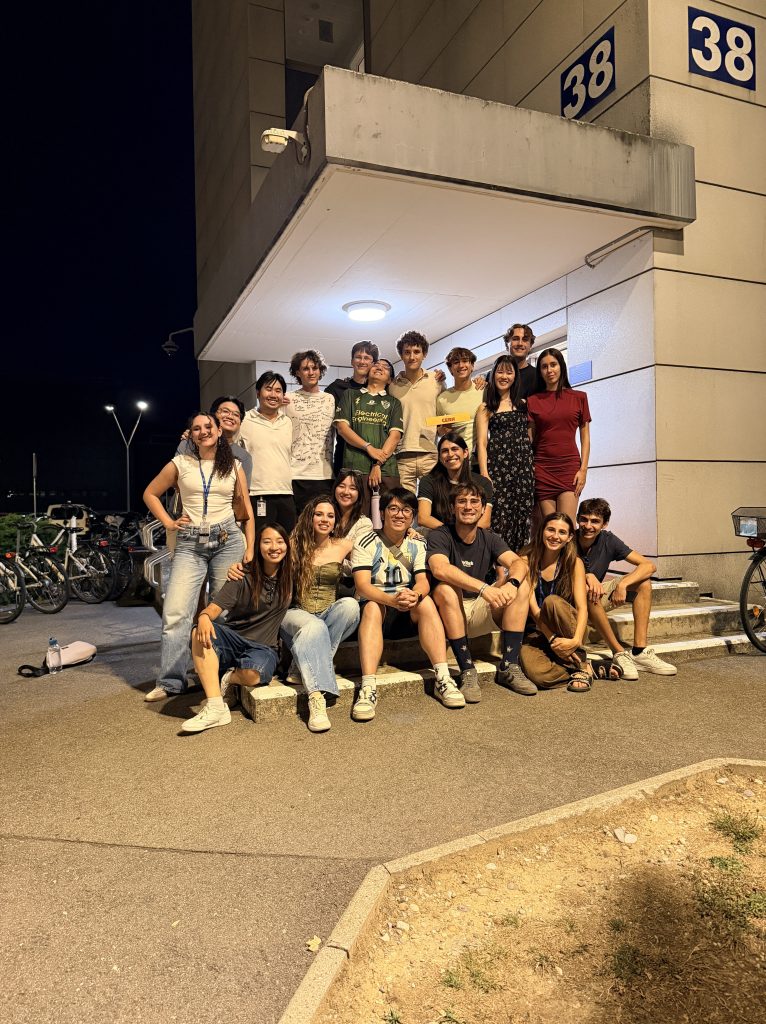
Best summer of my life, best people, best CERN! (2026)
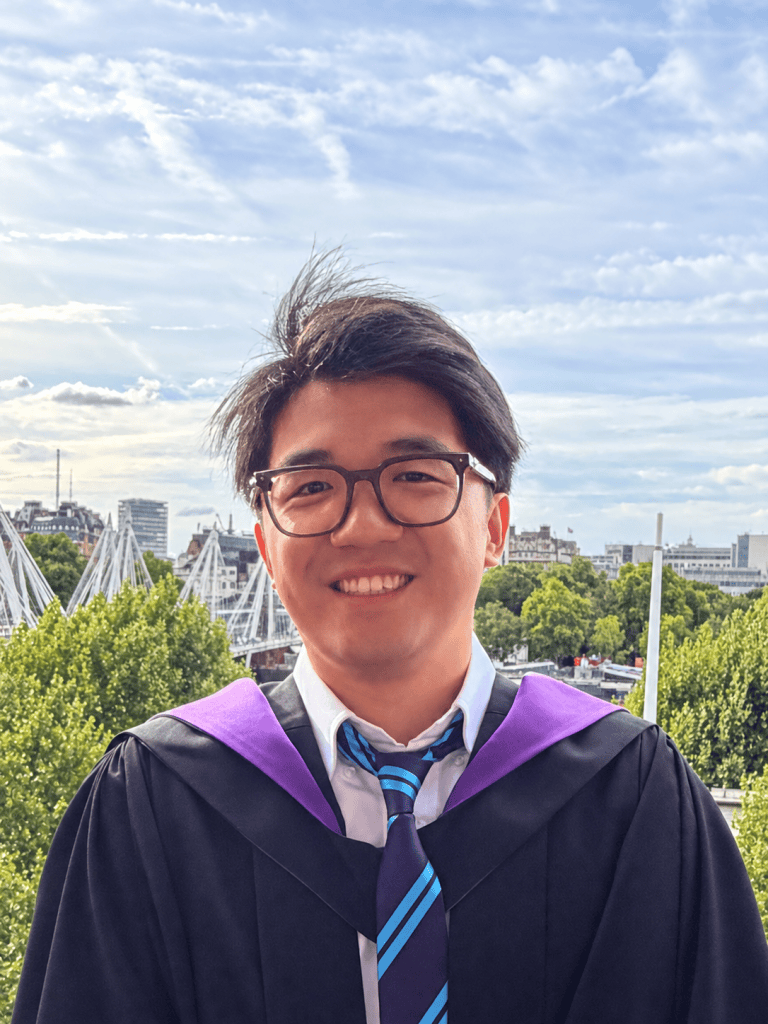
Graduated! (2026)
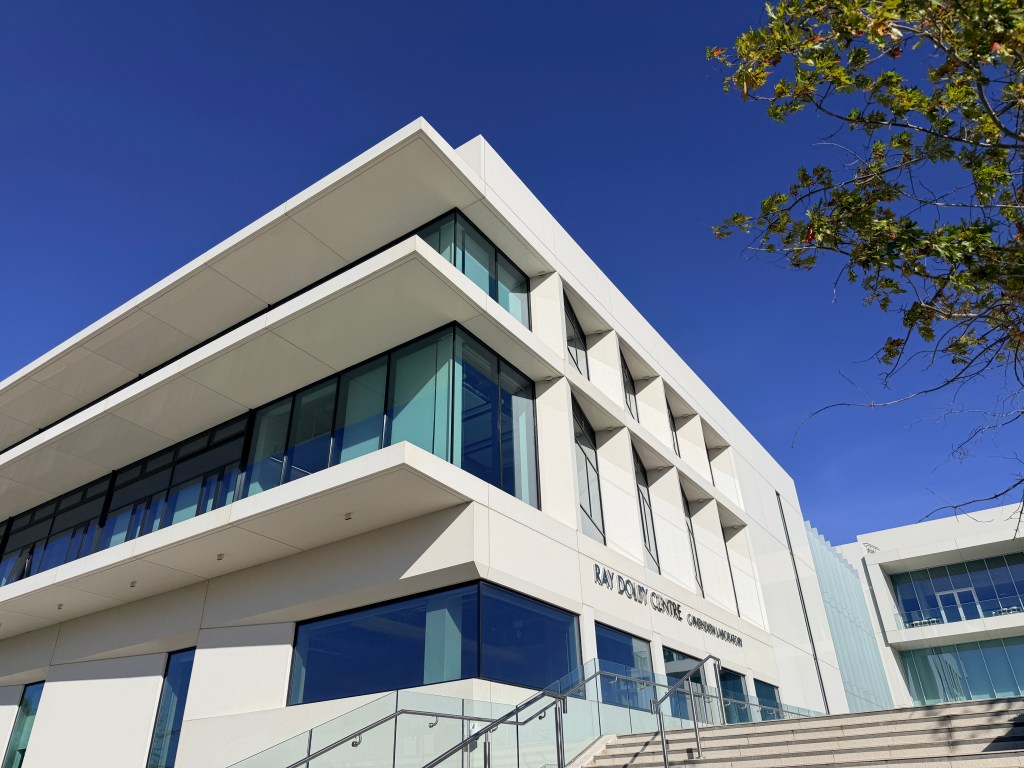
Cavendish III is awesome, still can’t believe I made it here. (2026)

