


Figure 1. Marble Arch is finally fixed with its ugly construction things taken out. Now it looks way better.
This week had been extremely busy with master applications so
Tuesday 14th October — FCC Group Meeting
First meeting in our group, introducing: me, Jon, Tim, Wei, Lauren and Stephen. This week’s discussion mainly revisited my previous project on ZH analysis, where we used a modified mass-drop tagger to improve efficiency in identifying highly boosted Higgs bosons.
The idea now is to deepen my understanding of how the tagger works before running any new scans — the event samples are already prepared.
We also talked about the HEL (Higgs Effective Lagrangian) model, which is quite flexible and allows exploration of all Wilson coefficients. A key task ahead is to understand how to connect this with the κ-framework and interpret deviations in the coupling constants.
I briefly presented what I worked on over the summer — studying deviations in the high-pT tails of ZH jet distributions. There were noticeable large deviations, but I still need to check if those results are physically sensible. The current focus remains on Higgs + vector boson production.
Model and Tools
We are mainly using MadGraph and Herwig for event generation. The main analyses cover ZHand possibly di-Higgs processes (though the latter seems less sensitive).
There’s also discussion about backgrounds — for instance, Z decays into neutrinos leading to bb̄ final states. The plan is to handle these using our Rivet routine.
Main Goals
The broader question behind all this is:
Is the Higgs truly a fundamental scalar particle?
We aim to study how sensitive high-pT regions are to possible deviations in the Higgs vertex. The near-term steps are:
- Compare SM vs HEL predictions — when all coefficients are set to zero, the HEL model should reproduce the SM. I’ll check this by comparing total cross sections at LHC (13 TeV) and FCC (50–90 TeV) energies.
- Cross-check MadGraph (Wei’s model) against HEL in Herwig.
- Understand how Contur maps out constraints — black for data, red for SM prediction, blue for BSM+SM combination.
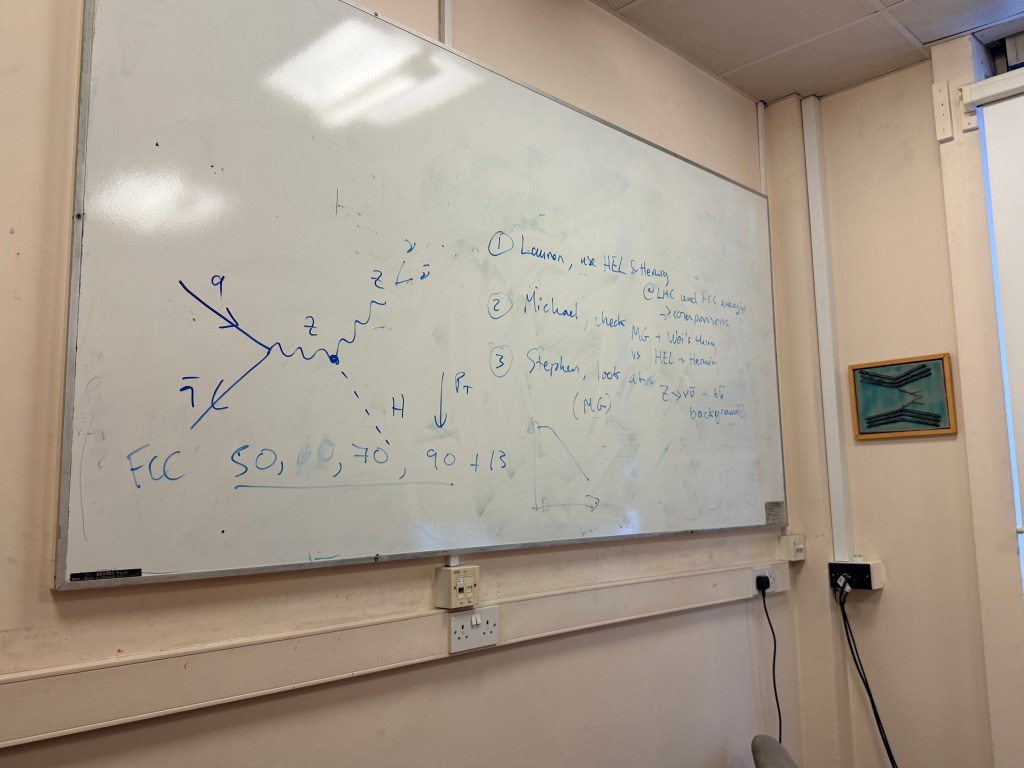
Figure 2. Short term plan and a quick view of qq-zH
Friday 17th October — ATLAS Meeting
I also attended the ATLAS internal meeting, where several updates were presented:
- Phase II Upgrade: BPOL DC–DC converter issue
- ITK progress and detector preparation for HL-LHC
- LHC configuration for high-intensity running
- Data-taking efficiency: now at an impressive 96.5 %
- General updates on detector and trigger performance
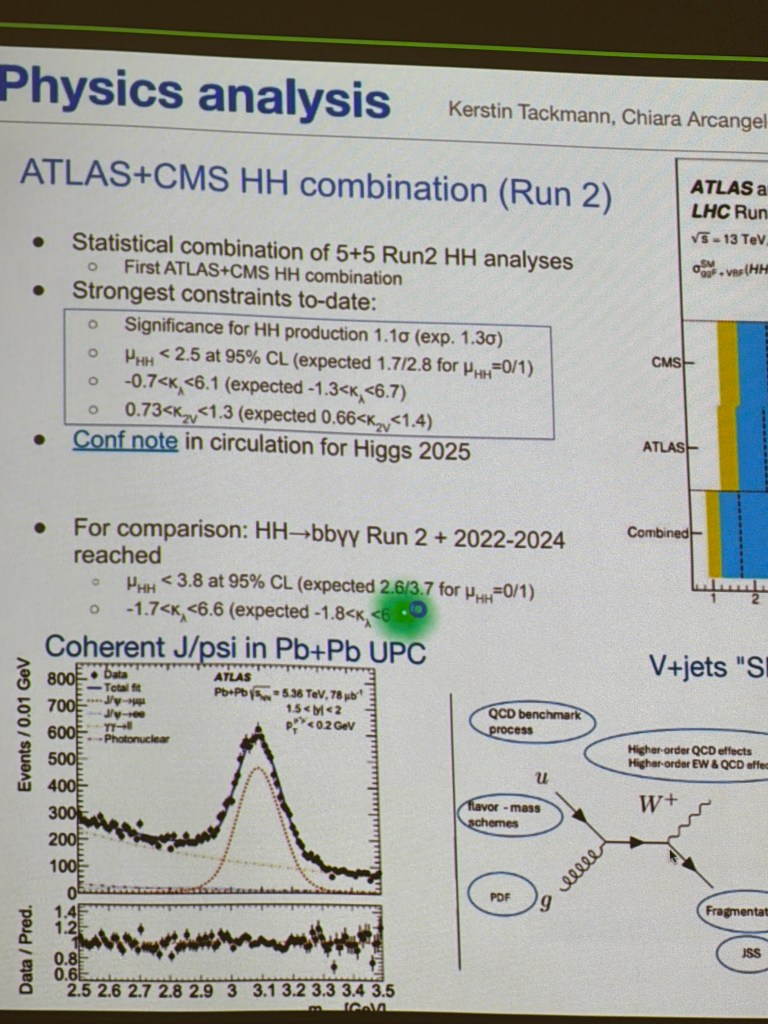
Figure 3. Summary of recent ATLAS+CMS Higgs pair-production (HH) combination results from Run 2 analyses.
 Noot in Circle